
How to protect restaurant margins without raising prices

With the release of the latest UK budget, operators are feeling the pressure right now. Off the back of this, many restaurateurs believe they’re stuck choosing between two bad choices:
- Raise prices and risk scaring off already price-sensitive customers
- Absorb rising costs and watch margins quietly deteriorate
But there’s a third way that’s already working for operators across the sector: operational efficiency.
With tighter labour deployment, optimal stock ordering, and accurate forecasting, margins recover without cutting hours or adding a single penny to the menu price.
Keep reading to find out more about the current climate and how to improve efficiency to safeguard your profits.
The impossible choice hospitality is being forced into
If hospitality feels like it’s being squeezed from every angle, it’s because it is.
The numbers paint the picture clearly:
- UK: 1,409 restaurant insolvencies in 2023/24, the highest in more than a decade.
- Ireland: In 2024, the RAI estimates that an average of two restaurants closed each day.
Not to mention, costs are up across the board. The new UK budget is increasing the minimum wage, energy costs are still rising, supplier uplifts are rife… the list goes on.
For operators, this creates a “price rise vs margin bleed” trap. You raise prices and risk a drop in footfall, or you hold prices and watch net profit decline.
Given these circumstances, it’s no surprise so many operators feel stuck.
Why price increases aren’t always the right move
Costs go up and the kneejerk reaction is to hike menu prices. But is this always the answer?
In short, no.
If you hike prices too much and too often, you risk losing customers (or preventing them from dining with you in the first place). Not only does this impact your bottom line, but it also influences your brand perception – and not in a good way.
Consumers are also much pickier about their spending habits. 6 in 10 consumers now say price is the biggest factor in choosing where to eat, outweighing appealing menu items (54%) and speed of service (25%).
Side note: Delivery and QSR brands continue to win price-sensitive customers who want speed, consistency and predictable value. However, casual dining footfall declined even during major sporting moments, while pubs (seen as better-value) surged.
To sum it up: If you increase prices, you risk:
- Smaller order sizes
- Reduced loyalty
- Losing customers altogether
But the good news? There’s another approach to counteract rising costs: operational efficiency.
The lever operators forget: Operational efficiency
Operational efficiency involves running your hospitality business with precision instead of instinct. It looks like:
- Better forecasting so you staff to actual demand (not guesswork) and stop paying for hours you don’t need.
- Better staff scheduling so labour flexes with sales patterns, weather swings and events, not fixed templates.
- Better purchasing accuracy so ingredients match real consumption and you avoid over-ordering, emergency top-ups and inflated week-end stocks.
- Better waste management so prep aligns with demand and GP stops eroding quietly in the background.
- Better cost control so you catch problems (labour creep, margin drift, supplier price jumps) before they hit the P&L.
- Better visibility across labour, inventory and sales so managers can take action daily, not wait for month-end surprises.
And above all: zero guesswork.
What efficiency really means: The operator-first version
Let’s really drill-down on what hospitality efficiency means from an operator’s point of view:
- The right people working the right hours
- The right amount of stock ordered for the demand you’ll actually get
- The right dishes pushed because they’re genuinely high-margin
- The right decisions made every single day, not once a month
Think of it as running smarter with what you already have, using real data to guide every shift, order, prep plan and staffing decision. As a result, you protect margins without touching menu prices or squeezing staff.
Take a look at Roasting Plant Coffee as an example. The multi-site coffee shop achieved an 18% reduction in labour costs within two months of adopting Nory’s.
Using Nory gave their teams real-time forecasting, accurate staffing guidance, and clearer visibility over what each shift needed. Instead of over-scheduling or reacting too late, managers could make daily, data-driven decisions on labour, inventory, and prep.
The results? Leaner operations without putting extra pressure on staff or sacrificing service quality.
When operators get this right, they remove the three biggest margin killers: guesswork, waste, and inconsistency. And as a result, margins lift without raising prices or cutting team hours.
The business case: Efficiency has a bigger ROI than any price increase
Let’s break down the numbers the way an operator actually feels them. Costs rise across the board:
- Rent: +10%
- Labour: +7%
- Food: +5%
And in Ireland, you may be carrying higher VAT on top of this.
For most operators, the instinctive response is simple: “We’ll have to raise prices.”
But here’s the problem – price rises no longer behave the way they used to.
Consumers are hyper-sensitive, trading down to cheaper formats and cutting frequency. A 50p increase on a dish doesn’t always land. And even when it does, it rarely offsets the rising cost base.
Now compare that with what happens when you improve operational efficiency:
- Labour efficiency improves by 15%. You’re no longer paying for unnecessary hours because scheduling aligns with real demand patterns. Sales per labour hour rise, and teams are deployed exactly where they’re needed.
- Waste drops by 30%. Prep tightens. Ordering becomes accurate. Stock sits at the right level. GP stops bleeding quietly through over-production and over-ordering.
- Gross profit increases by 2-4 points. Better inventory control, smarter purchasing and real-time insights lift GP in a way that price rises can’t touch.
- Daily P&L visibility closes leaks before they grow. Managers see issues instantly, not four weeks later in a month-end report. Tiny problems (like labour creep) get fixed before they turn into full-blown P&L damage.
Put those improvements together and net profit stabilises (or improves) without touching prices or cutting a single hour.
The three inefficiency leaks destroying margins
There are three hidden leaks quietly draining money from restaurants: labour, food waste, and visibility.
Let’s take a look at each in more detail.
1. Labour inefficiency: The biggest and most fixable cost
Labour is almost always your largest controllable expense, typically around 30-45% of revenue. This makes it your biggest controllable cost and best chance at improving profitability.
Every hour overscheduled, every shift misaligned with demand, and every staffing decision made without data directly impacts your margins.
What most operators don’t realise is how quickly labour improvements convert to better profits. A small change in how you forecast demand and plan rotas often saves more than any menu price increase – and without detriment to your customers.
Real operators are already proving what’s possible:
- Josie’s reduced labour by 23% while increasing sales per labour hour by 20.5% with Nory, showing efficiency improves service.
- Barge East used Nory to lower labour expenditure by 10%, simply by implementing forecasting-led scheduling that matched staffing to peak and low periods.
2. Inventory and waste inefficiency: The silent profit bleed
Food waste is one of hospitality’s biggest hidden drains. UK hospitality alone accounts for 18% of the country’s total food waste, and WRAP estimates that the sector generates 800,000 tonnes annually (based on 2021 data).
The challenge is that waste is deceptive. It doesn’t show up as a separate line on your P&L. Instead, it inflates your cost of goods, reduces your GP, and disguises itself in:
- Overproduction
- Poor portion control
- Inaccurate par levels
- Slow or outdated stock processes
- Infrequent or inaccurate stock counts
Most operators don’t know their real GP percentage because the numbers are skewed by invisible losses. But the operators who get in control of this see significant improvements.
Take a look at Bubble CiTea as an example. Using Nory, the company reduced waste by 44% by using data-led forecasting and daily production planning.
3. Visibility inefficiency: Disconnected data = slow decisions
Operators often use multiple systems for sales, labour, inventory, and payments. But if these systems don’t speak to each other, your operational decisions are always a step behind.
Here’s what happens when visibility is poor:
- You make monthly decisions instead of daily adjustments, meaning issues persist for weeks before being corrected.
- Managers lean on intuition instead of evidence, which creates inconsistent performance across sites.
- You miss margin losses because no one sees the full picture, only fragments.
- The P&L becomes a retrospective document, something you analyse after the damage is done.
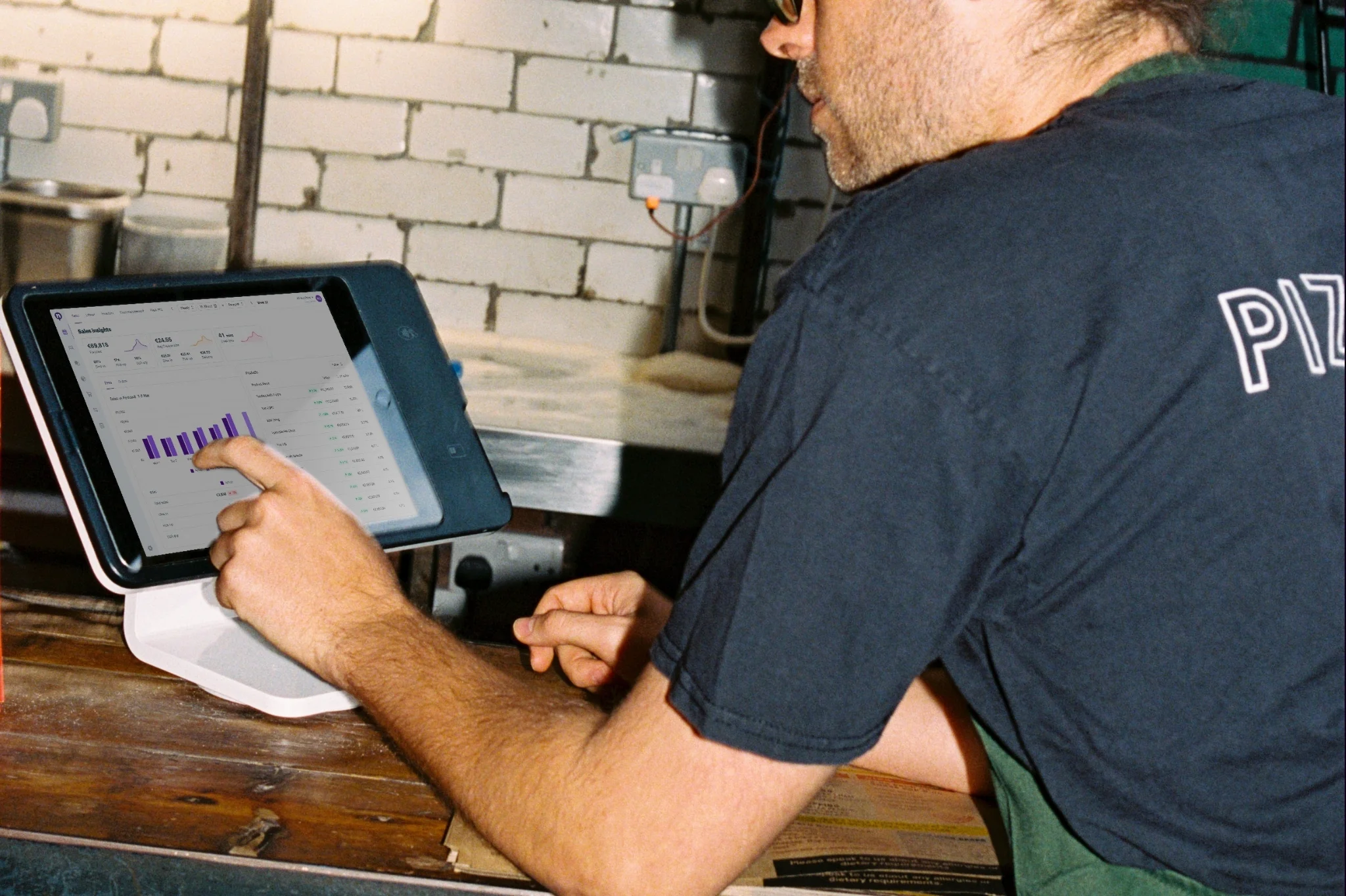
Real efficiency requires unified, real-time data. Sales forecasts automatically impact labour schedules, inventory usage aligns with actual sales, and operational decisions happen in real time.
Nory, for example, brings labour, sales, inventory, and more into one platform. As a result, operators can easily make data-driven decisions that improve profits in real time.
How to get more efficient immediately (practical steps)
Here are some simple steps to improve efficiency and reduce restaurant operating costs.
Audit your labour for the next 30 days
Most inefficiencies hide in pattern gaps: too many people working early in the week, not enough during peak hours, or rotas that don’t reflect real demand.
A labour audit helps you understand where overstaffing, understaffing, or inefficient deployment is costing money.
What to do:
- Compare planned vs. actual labour each day to spot consistent overages.
- Look at sales per labour hour to identify strong and weak shifts.
- Flag any recurring overstaffed periods and correct them in next week’s rota.
Identify the top five waste drivers behind GP variance
Most restaurants miss their theoretical GP because of invisible waste. Understanding what’s eroding margin allows you to fix the problem at its source – not with guesswork, but with data.
What to do:
- Review GP variance over the last four weeks and isolate the biggest contributors.
- Observe prep routines to identify overproduction or portion drift.
- Run daily waste logs to quantify what’s being thrown away and why.

Analyse your 10 highest and lowest-margin dishes
Menu performance is rarely consistent. Your best dishes can subsidise weaker performers, but only if you know which is which. High-margin items need more visibility, while low-margin items need adjustment or removal.
What to do:
- Rank dishes by actual GP%, not by gut feel or sales alone.
- Spotlight high-margin dishes on menus, your website, or on social media.
- Fix low-margin dishes by adjusting recipes, portions, ingredients, or pricing.
Review demand patterns (hourly, daily, weather-linked)
Demand changes fast in hospitality. Footfall shifts with weather, events, school holidays and payday cycles. When staffing and prep match these patterns, efficiency climbs immediately.
What to do:
- Compare the last 8-12 weeks of hourly sales to identify predictable surges and dips.
- Adjust staffing templates by day-part rather than full-day assumptions.
- Use weather forecasts and event calendars to fine-tune prep and restaurant labour optimisation.
Bring labour, forecasting and stock into a single view
When these systems live separately, managers spend more time guessing and less time improving performance. Unified visibility means decisions are faster, more accurate and based on reality, not instinct.
What to do:
- Use a centralised system (like Nory) where sales, labour, and inventory update in real-time.
- Ensure managers can see tomorrow’s forecast, labour plan, and stock position at a glance.
- Make daily corrections part of the pre-shift routine.

Set weekly efficiency targets
Targets create clarity. Most managers want to improve performance, but few have clear numbers to aim for. Weekly targets create momentum, accountability and focus.
What to do:
- Set site-specific goals for labour %, waste %, and sales per labour hour.
- Review targets every Monday and adjust plans for the week ahead.
- Celebrate teams that hit targets to reinforce positive behaviours.
Train managers to use daily P&L insights rather than month-end reports
Month-end is too late to fix anything. Daily performance checks help managers course-correct immediately, which prevents losses compounding across the entire period.
What to do:
- Give managers access to real-time P&L indicators, not just end-of-month numbers.
- Make daily margin reviews part of the close-of-day process.
- Encourage managers to take corrective action the same day: adjust labour, update prep, correct stock errors.
Real operators, real results: efficiency that protects profit
Across the UK and Ireland, operators using accurate forecasting, consolidated data and real-time insights are seeing measurable improvements:
- Coffee brands are eliminating over-ordering of milk, fruit purées, and syrups by switching to demand-led purchasing. These amendments are reducing COGS, cutting emergency top-ups and stabilising GP%.
- QSR operators are adjusting labour around real demand drivers like weather, school timetables, and local events. As a result, they’re lowering labour %, increasing sales per labour hour, and improving service speed during peak times.
- Casual dining groups are reducing waste by tightening prep accuracy and matching production to actual sales. The results? Double-digit waste reductions, stronger GP, and smoother kitchen operations.
These improvements are worth more than any 50p menu increase. Why? Because they strengthen the fundamentals of the business rather than shifting the cost burden onto guests.

The win-win: When efficiency works, nobody suffers
When operators get operational efficiency right, everyone benefits. Diners don’t pay higher prices, loyalty stays strong, and teams aren’t overstretched.
With the right technology, efficiency is easier to implement than you might think. Nory, for example, provides real-time visibility into labour schedules, costs, sales, inventory, and demand, making decisions proactive instead of reactive.
Want to see exactly how much profit efficiency could return to your P&L? Book a chat with the team today.