How do I calculate and reduce food cost percentage? 5 essential steps to mastering menu pricing

Food cost percentage is one of the most powerful levers in a food business and one of the easiest to misunderstand.
Many operators know they should be tracking it, but fewer feel confident using it to make smart pricing, purchasing, and menu decisions. That’s where margins quietly slip away.
The good news? Calculating and reducing your food cost percentage isn’t about guesswork or cutting corners. It’s about understanding where your money goes, spotting inefficiencies early, and using data to price your menu with confidence.
In this guide, we’ll walk through five essential steps to mastering food cost percentage. You’ll learn how to calculate it properly, how to identify what’s driving it up, and how tools like Nory help food businesses track costs and protect margins in real time.
Here’s what you’ll learn
- Master your ingredient costs: Know exactly what goes into each dish, why COGs matter, and how to track them with confidence.
- Control your overheads: See how labour, rent, and other costs impact margins and use that insight to price smarter.
- Spot your profit drivers: Identify which menu items boost margins and which drag them down, so you can make data-driven decisions.
- Slash waste and manage stock: Keep inventory under control, reduce waste, and track ingredient use in real time.
- Negotiate like a pro: Secure better deals, optimise purchasing, and build supplier relationships that protect your margins.
1. Understand the cost of goods sold (COGs)
Cost of goods sold (COGs) is the total cost of ingredients used to produce the food you sell during a specific period. This includes raw ingredients, recipe components, and any direct food inputs (but not labour or rent).
COGs is the foundation of your food cost percentage. If your ingredient costs are inaccurate, outdated, or incomplete, your menu pricing is built on shaky ground.
For multi-site operators or fast-moving kitchens, even small errors can snowball into major margin loss. Reducing COGs means tighter control over pricing, more predictable profitability, and the ability to protect margins without sacrificing quality or consistency.
Here are some of the ways to reduce the COGs in your business:
- Build recipe-level cost clarity. Break each menu item down into its individual ingredients and portion sizes so you know exactly what it costs to produce. Even small inaccuracies in ingredient costing can snowball across hundreds of dishes, leading to underpriced items and shrinking margins.
- Update ingredient pricing. Food inflation can quietly erode margins long before it shows up in your P&L statement, so regularly update ingredient costs to reflect supplier price changes rather than relying on historical averages.
- Standardise cost calculations. Use the same costing method across all sites, menus, and teams to avoid inconsistencies and make sure pricing decisions are based on reliable data.
One of the most effective ways to track COGs is to use restaurant technology. Nory, for example, automatically tracks COGs using live purchasing, inventory, and sales data, providing real-time access to costs and revenue at a single glance.
With instant insights, operators get instant visibility into ingredient spend and menu profitability, making it far easier to stay ahead of rising costs.
Nory success story: Gelato producer Badiani partnered with Nory to centralise inventory tracking and connect it directly to their POS. By using Nory’s real-time forecasting and inventory insights, Badiani achieved 96% sales forecast accuracy, which helped them optimise ordering, reduce food waste, and improve margins across multiple sites.
2. Evaluate operating expenses
Operating expenses include all non-ingredient costs required to run the business, such as labour, rent, utilities, packaging, and other overheads. These costs determine how much margin your food cost percentage actually needs to support.
A “good” food cost percentage can still lead to poor profitability if operating expenses are too high.
For instance, imagine your food cost percentage is 30% but labour and rent eat up 50% of revenue. Even with tight ingredient control, your overall profit is squeezed.
Understanding your operating expenses helps you see the full picture, price your menu realistically, and avoid surprises at the end of the month.
Take a look at some of the ways to evaluate your operating expenses:
- Separate fixed and variable costs. Identify which expenses stay constant and which scale with sales volume so you understand where flexibility exists. Pricing decisions should reflect cost behaviour, not just averages.
- Assess margin, not just food cost. Look at how food costs interact with labour and overhead to determine true profitability. This helps avoid underpriced menus that can’t sustain the business.
- Monitor trends over time. Track operating expenses alongside food costs to spot inefficiencies early. Consistent visibility helps prevent gradual margin erosion.
Nory’s restaurant management software helps operators track all this information in a single location. By connecting sales, staffing, and inventory data in one platform, operators can see how pricing decisions impact margins.
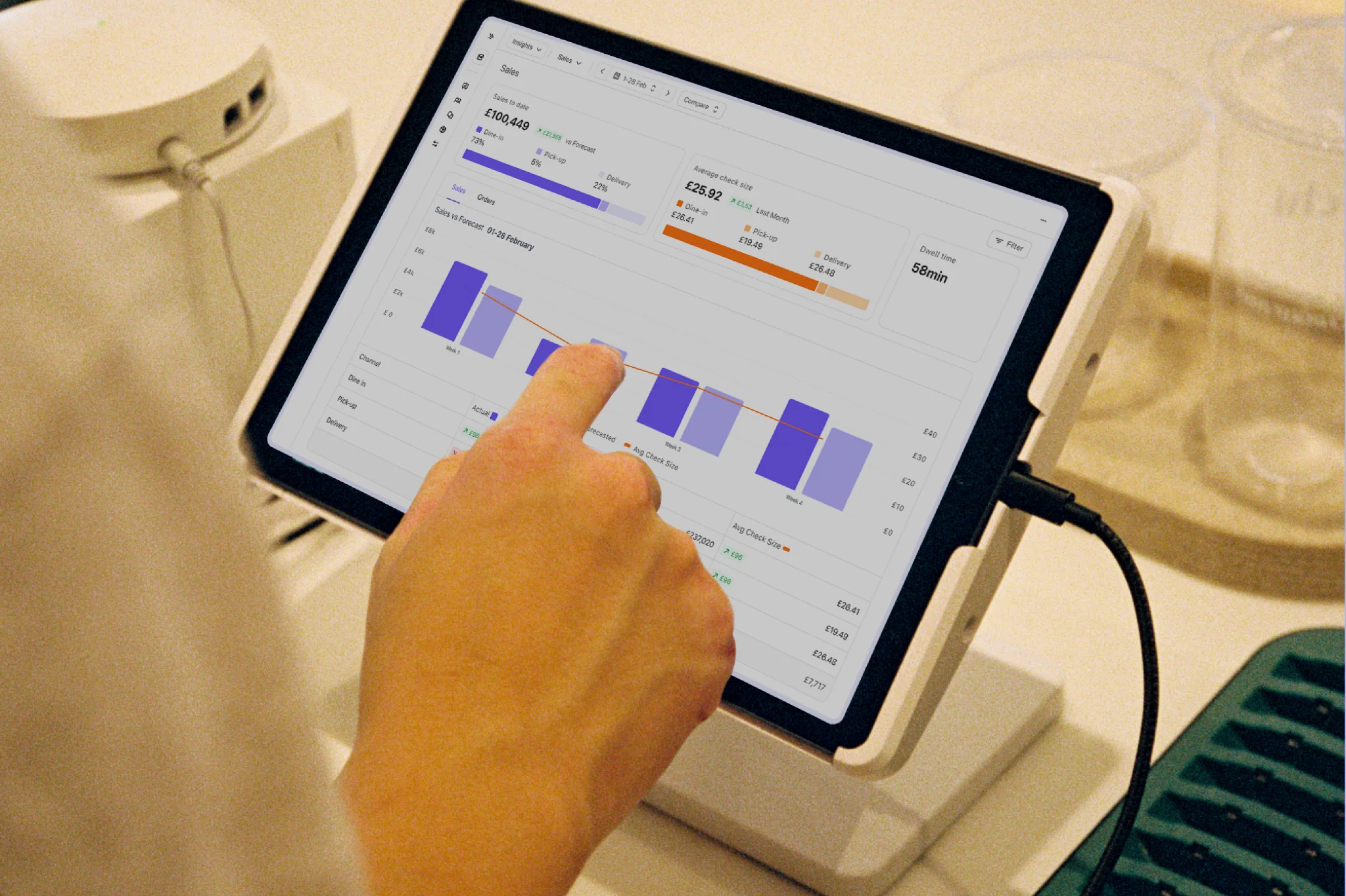
With these insights, operators can make adjustments with confidence, not guesswork.
3. Use a profitability calculator
A profitability calculator measures how much profit each menu item contributes after accounting for food costs and overheads. Put simply, it reveals which menu items actually make you money.
High sales volume doesn’t always equal high profitability, so a profitability calculator is valuable for tracking margins and costs to show where your profits are thriving. Without clear profitability data, underperforming dishes often stay on the menu far longer than they should, dragging down your overall performance.
Here are some of the ways to use a profitability calculator in your restaurant:
- Calculate contribution margin per dish. Measure how much money remains after food costs for each item. As mentioned, revenue alone doesn’t always equal profitability.
- Compare margin versus popularity. Analyse which high-volume items underperform financially and which low-volume items overdeliver. This insight informs smarter menu engineering, making sure your menus have the most profitable items front-and-centre.
- Use actual sales data. Base calculations on real sales mix and costs, not theoretical averages. Accuracy ensures pricing and menu changes are grounded in reality.
To get meaningful results, profitability calculators rely on accurate, up-to-date sales and cost data. Nory brings this data together automatically, pulling in live sales, purchasing, and inventory information so profitability updates in real time.
That means operators can:
- Spot margin issues early
- Test changes confidently
- Adjust pricing, portions, or promotions for the best results
Take a look at Bubble CiTea as an example. Using Nory’s real-time inventory and sales insights, the bubble tea franchise reduced overall waste by 44% and cut ingredient costs:
The company gained clearer visibility into which products were most profitable, allowing them to make smarter inventory and pricing decisions all while supporting franchise growth.
4. Implement food inventory management
Food inventory management tracks what you buy, what you use, and what’s wasted. Without inventory visibility, businesses frequently misdiagnose the problem as pricing rather than process.
Inventory control is one of the fastest and most reliable ways to reduce food cost percentage. It shows you exactly what’s in stock and how it’s being used, meaning that you can:
- Prevent over-ordering. Keep an accurate record of current inventory to avoid unnecessary purchases. Overbuying ties up cash, increases spoilage, and pushes food costs higher.
- Minimise spoilage. Track ingredients nearing expiry and plan prep or specials around them. Wasted ingredients hit your margins directly and skew your food cost calculations.
- Make smarter purchasing decisions. Use real-time inventory data to guide orders rather than guessing or relying on habits. This helps optimise stock levels, reduce waste, and keep margins healthy.
So how exactly do you improve your food inventory management?
Take a look:
- Track inventory consistently and accurately. Conduct regular counts using standardised processes. This matters because inconsistent tracking masks loss and distorts COGs.
- Set and review par levels. Define optimal stock levels based on demand patterns and supplier lead times. Proper par levels reduce spoilage and tied-up cash.
- Analyse food waste at the source. Identify whether waste comes from prep, overproduction, storage, or portioning. Targeted fixes are far more effective than blanket cost cuts.
One of the easiest ways to keep a close eye on inventory costs is to use restaurant software like Nory.
Nory’s inventory and waste tracking tools provide real-time visibility into stock levels, usage, and waste in one location. Instead of reacting after costs rise, teams can spot issues early and take action while there’s still time to protect margins.
5. Negotiate with suppliers
Ingredient costs fluctuate constantly, but many supply chain agreements don’t. Without regular reviews, businesses often absorb price increases passively, allowing margins to erode unnoticed.
Supplier negotiation is about more than chasing the lowest price. It involves reviewing contracts, delivery terms, and reliability to make sure your suppliers match your current volume and operational needs, not last year’s assumptions.
Take a look at these tips for effective supplier negotiations:
- Review supplier pricing on a fixed cadence. Compare current prices against historical data and market alternatives. This prevents gradual overpayment through inertia.
- Use volume and consistency as leverage. Demonstrate reliable purchasing patterns to negotiate better terms. Long-term value often beats one-off discounts.
- Negotiate with data, not anecdotes. Bring clear spend, volume, and usage data into discussions. Data-driven negotiations lead to stronger outcomes.
Nory success story: Rocksalt used Nory to centralise inventory tracking and monitor supplier pricing in real-time. With clearer visibility into waste and ordering patterns, the team tightened inventory control, reduced unnecessary purchasing, and improved consistency across sites.
Because all the ordering and invoices are updated daily, we can catch a price increase from a supplier pretty much instantly. As soon as we spot it, we can react to it immediately.
Stephen Burns, Group Operations Manager at Rocksalt
Food cost percentage FAQs
How do you calculate COGs?
COGS is typically calculated using the following formula:
Opening inventory + inventory purchased – closing inventory = cost of goods sold
To understand how this works in practice, let’s break down each component.
- Opening inventory: The value of the stock you have on hand at the start of the period you’re measuring. For example, if you begin the week with £1,800 worth of ingredients in storage, that figure becomes your opening inventory.
- Inventory purchased. All ingredients bought during the period. If you place £1,400 worth of supplier orders throughout the week, that amount is added to your calculation.
- Closing inventory. This is the value of stock remaining at the end of the period. Say you finish the week with £700 worth of ingredients still in your fridges and dry storage – that’s your closing inventory.
Using the formula, your cost of goods sold for the week would be calculated as:
£1,800 (opening inventory) + £1,400 (purchased inventory) – £700 (closing inventory) = £2,500 COGS
This figure represents the total value of ingredients actually used to produce the food you sold during that period.
What does having a food cost percentage of 40% mean?
A food cost percentage of 40% means that 40 pence of every pound you make in food sales goes toward paying for ingredients.
So if a dish sells for £10, around £4 of that covers the cost of the food itself. The remaining £6 has to cover everything else: labour, rent, utilities, marketing, equipment, and profit.
Here’s why this matters:
- It sets your margin ceiling. With a 40% food cost, you only have 60% of revenue left to run the business. If labour and overheads are high, profitability gets tight very quickly.
- It impacts pricing decisions. A 40% food cost may be workable for high-margin, low-labour concepts, but risky for operations with complex menus or long prep times.
- It highlights where pressure points are. If your target food cost is 30-35%, sitting at 40% signals issues like rising ingredient prices, over-portioning, waste, or underpriced menu items.
In short, a 40% food cost percentage isn’t automatically “bad”, but it leaves far less room for error.
The higher the percentage, the more disciplined you need to be with labour, waste control, and menu pricing to stay profitable.
What is a good food cost percentage?
A “good” food cost percentage depends on your operation, service style, and cost structure. However, for most food businesses, it typically falls within 28% and 35%.
This range generally leaves enough margin to cover labour, rent, and overheads while still delivering profit.
That said, context matters:
- Quick-service and fast-casual concepts often aim for the lower end of the range, around 25-30%, because they rely on volume and tight cost control.
- Full-service restaurants tend to operate closer to 30-35%, reflecting higher ingredient quality, more complex dishes, and greater prep time.
- Premium or chef-led concepts may run at 35-40% if higher menu prices, brand positioning, or experience-driven value justify it.
The key point: a “good” food cost percentage is one that works with your labour and operating costs, not one that hits an arbitrary benchmark. If food costs are low but labour is high, margins can still suffer, and vice versa.
The strongest operators don’t chase a single number. They track food cost percentage alongside labour, waste, and menu profitability to make sure the entire business model is sustainable.
Turning food cost control into a long-term advantage
Reducing food cost percentage is about building systems that provide ongoing visibility, control, and adaptability as costs and conditions change.
When food businesses understand their COGs, align food costs with operating expenses, analyse menu profitability, and use accurate data, food cost percentage becomes a strategic tool.
With Nory, operators gain a real-time overview of costs, waste, and performance. These insights enable smarter menu pricing, stronger margins, and a more resilient business overall.
Want to find out more? Get in touch to start tracking sales and make a difference to your bottom line.